Introduction
Ammunition and firearms are powerful and potentially dangerous. This glossary is informational and intentionally non-technical, where it could become instruction for unsafe or illegal activities (for example: exact reloading recipes, pressure measurements, or modification techniques). Always follow local laws, manufacturer instructions, and range rules, and get hands-on training from a qualified instructor before attempting anything beyond basic, safe handling and shooting.
A — Action / Ammunition / Adapter
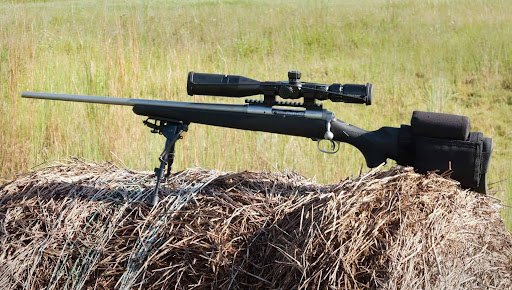
- Action: The mechanism of a firearm that loads, fires, and ejects cartridges (examples: bolt action, semi-automatic). Not an ammo term per se, but important because different actions use different kinds of ammunition and feeding methods.
- Ammunition: The complete cartridge — primer, propellant (powder), case, and projectile (bullet or shot). “Ammo” is the casual word you’ll hear most.
- Adapter: A device used to make a firearm accept a different size or type of cartridge or magazine; not recommended without manufacturer approval.
B — Ballistics / Ballistic Coefficient / Brass
- Ballistics: The science of a projectile’s behavior.
- Internal ballistics = what happens inside the gun (pressure, ignition).
- External ballistics = the bullet’s flight (drop, wind).
- Terminal ballistics = what happens when the bullet hits a target.
- Ballistic Coefficient (BC): A number describing how well a bullet flies through air — higher BC means it resists wind and retains speed better.
- Brass: Commonly used term for cartridge cases made of brass (an alloy). Brass cases are often reloadable and widely used for many cartridges.
C — Caliber / Cartridge / Cannelure / Case
- Caliber: The diameter of the bore or the bullet, expressed in inches (e.g., .308) or millimeters (e.g., 9mm). For new shooters: caliber names can refer to both the bore diameter and specific cartridge families — context matters.
- Cartridge: The complete round of ammunition (case + primer + powder + projectile).
- Cannelure: A groove on a bullet or case crimp point that can help hold a bullet in place; mostly relevant to reloading or certain factory loads.
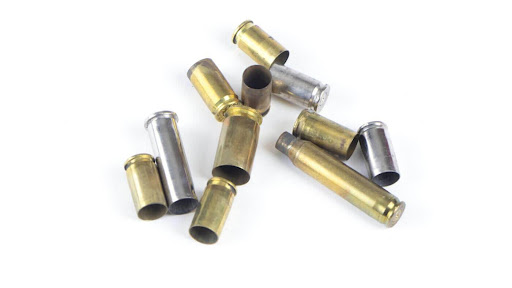
- Case: The container (usually brass, steel, or aluminum) that holds the primer, powder, and bullet.
D — Diameter / Dwell Time / Double-Stack
- Diameter: Another way to talk about caliber in practical terms — bullet diameter matters for proper chambering and feeding.
- Dwell Time: In suppressed firearm discussions, time between ignition and the bullet exiting the barrel; technical, rarely a concern for casual shooters.
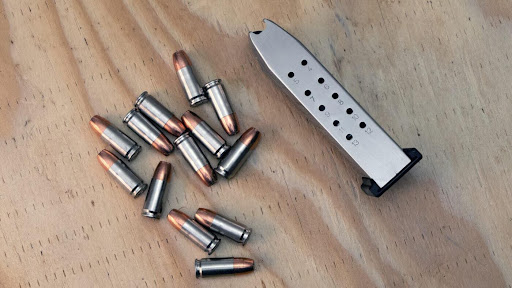
- Double-Stack: Describes a magazine design where cartridges are staggered in two columns to increase capacity (common in many pistol magazines).
E — Energy / Ejection / Expander
- Energy: Usually expressed in foot-pounds (ft·lb), it describes the kinetic energy a bullet carries. It’s a function of mass and velocity — useful when comparing how different rounds perform downrange.
- Ejection: The act of a fired cartridge case being thrown from the firearm after firing. Ejection patterns (left/right/forward) are normal and depend on the firearm design.
- Expander: Part of some reloading dies that helps size the case neck; not something a new shooter needs to use without training.
F — FMJ / Fragmentation / Fowler (not common)
- FMJ (Full Metal Jacket): A bullet with a soft core (usually lead) covered by a harder metal jacket. FMJ is common for range practice because it feeds reliably and is generally cheaper.
- Fragmentation: When a projectile breaks apart on impact — a characteristic of some specialized bullets (e.g., some hunting or forensic contexts).
- Fouling: Deposits left in the barrel by firing; cleaning is part of routine firearm care.
G — Gauge / Grain / Gilding Metal
- Gauge: A sizing system for shotguns (e.g., 12 gauge, 20 gauge). Lower numbers mean larger bore; it’s different from rifle/pistol caliber naming.
- Grain (gr): Unit of weight for bullets and powder. One grain = 1/7000 of a pound. Bullets are commonly described in grains (e.g., 115 gr, 147 gr).
- Gilding Metal: A copper alloy used for bullet jackets.
H — Hollow Point (HP) / Headstamp / Hull
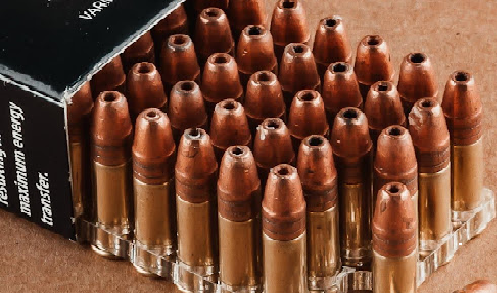
- Hollow Point (HP): A bullet with a cavity at the tip designed to expand on impact. Used for self-defense and hunting due to their energy transfer characteristics. Note: choice of defensive ammunition should follow local laws and range rules.
- Headstamp: Markings on the base of a cartridge case that indicate manufacturer, caliber, and sometimes production year — useful for identification.
- Hull: Another term for case, especially for shotgun shells.
I — Impact Point / Indexing / Incendiary
- Impact Point: Where a bullet strikes a target; important for sighting and zeroing firearms.
- Indexing: Ensuring components align properly; in ammo context, indexing often relates to magazine/feed alignment.
- Incendiary: Specialized ammo that ignites on impact — military or specialized use; not relevant for casual civilian shooting and often restricted.
J — Jacket / JHP / Jacketed Hollow Point
- Jacket: The metallic covering around a bullet’s core (often copper or a copper alloy).
- JHP (Jacketed Hollow Point): A hollow-point bullet with a jacket — combines expansion with controlled fragmentation. Popular for defensive loads, but always check range policies before bringing defensive ammo.
K — Kinetic Energy / Keyholing
- Kinetic Energy: The energy a moving bullet possesses (see Energy). Useful for comparing stopping power concepts across rounds.
- Keyholing: When bullets strike the target sideways, leaving a keyhole-shaped hole, usually caused by instability (twist mismatch or tumbling). If you see consistent keyholing on paper targets, check ammo and barrel compatibility and seek a gunsmith.
L — Loading / Lapua (brand) / Lube
- Loading: Can mean the act of putting ammo into a firearm, or reloading (the process of assembling new cartridges). For new shooters, “loading the magazine” or “loading the chamber” are common phrases.
- Lube: Lubrication used in firearms maintenance and sometimes on projectiles in specific contexts; simple cleaning and correct storage are more important for new shooters than complex lubrication routines.
M — Magnum / Muzzle / Muzzle Velocity
- Magnum: A designation for rounds with more power than standard versions (e.g., .357 Magnum). Usually higher pressure and energy; magnum loads increase recoil and wear.
- Muzzle: The end of the barrel where the bullet exits.
- Muzzle Velocity: The speed of the bullet as it leaves the barrel, typically measured in feet per second (fps). Higher muzzle velocity generally means a flatter trajectory and more energy, but it’s only one factor.
N — Neck / NATO / Nitrocellulose
- Neck: The tapered section of a cartridge case that holds the bullet (in bottleneck cartridges). Important in cartridge design and reloading contexts.
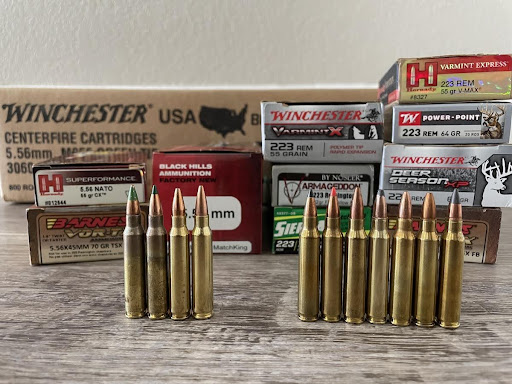
- NATO: When seen in ammo labels (e.g., 5.56×45 NATO), it refers to standardized military specifications. Civilian cartridges with similar names (e.g., .223 Rem) are not always identical — don’t mix without checking compatibility.
- Nitrocellulose: The base of most modern smokeless powders; technical detail only — know that powder type affects performance and safety in reloading.
O — Overpressure / OAL (Overall Length) / Open Tip Match
- Overpressure ( +P, +P+ ): Indicates higher-than-standard pressure loadings for some calibers (e.g., 9mm +P). These rounds can increase recoil and stress the firearm — only use if the firearm’s manufacturer approves.
- OAL (Overall Length): The full length of a loaded cartridge from base to bullet tip. Important in reloading and feeding reliability, but a newcomer only needs to recognize it as a spec that affects chambering.
- Open Tip Match (OTM): A style of precision bullet with a small open tip resulting from manufacturing; often used in match shooting for consistent aerodynamics.
P — Primer / Powder / Pistol-Caliber Carbine (PCC)
- Primer: The small component in the case base that, when struck, ignites the powder. Primers come in types (small pistol, large rifle, etc.) and should be matched to the cartridge.
- Powder (Propellant): The chemical that burns to generate gas and pressure to propel the bullet. Many varieties exist; do not experiment with powders without training.
- PCC (Pistol-Caliber Carbine): A rifle-style platform that fires pistol cartridges (e.g., 9mm). Popular for low-recoil practice and certain sporting uses.
Q — Quality Control / Quenched (metallurgy)
- Quality Control: How manufacturers ensure consistent performance. For shooters, choosing reputable brands generally reduces surprises.
- Quenched: A metallurgical process; not required knowledge for a beginner but occasionally shows up when discussing case or barrel materials.
R — Rimfire / Rimless / Rock-Chucker (reloader slang)
- Rimfire: A type of cartridge where the primer is in the rim of the case (e.g., .22 LR). Rimfires are typically lower pressure and are common for beginner practice.
- Rimless: A cartridge design where the case head is the same diameter as the body and a groove allows extraction; many modern centerfire cartridges are rimless by design.
- Reloading: The process of assembling new cartridges by reusing cases and replacing primer/powder/bullet. It’s a legitimate hobby but requires training, proper equipment, and strict attention to safety. Do not attempt without instruction.
S — Shot / Shot Size / Supersonic / Subsonic
- Shot: Small pellets loaded in shotgun shells for bird/hunt/sport shooting. Different shot sizes match different game or purposes.
- Shot Size: Numbering system for pellet diameter in shotgun loads. Higher numbers mean smaller pellets (e.g., #8 is smaller than #4).
- Supersonic/Subsonic: Describes whether a bullet travels faster than the speed of sound (~1,125 fps at sea level). Subsonic rounds are quieter (especially with a suppressor) but usually have more drop.
T — Terminal Ballistics / Tracer / Twist Rate
- Terminal Ballistics: What the bullet does when it hits — expansion, penetration, fragmentation. Important for hunters and defensive users to understand the intended performance of a round.
- Tracer: A bullet that leaves a visible trace of light to show its trajectory (military/specialized use).
- Twist Rate: The rate at which rifling spins a bullet in the barrel (e.g., 1:9 means one rotation in 9 inches). Twist affects stability, and some bullets require certain twist rates — consult firearm specs.
U — Unsized / Uniformity / UMC (brand)
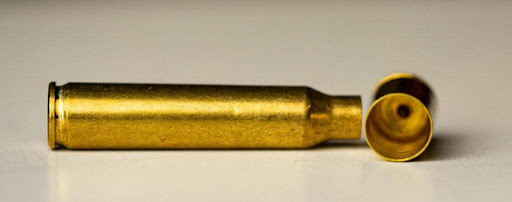
- Unsized: In reloading, a case that hasn’t been resized; not something to worry about as a new shooter unless you reload.
- Uniformity: Consistent dimensions and weight of components matter for accurate shooting; commercial ammo manufacturers work toward uniformity.
- UMC: Example of a brand name you might see on boxes (Republic/UMC) — remember brand reputation can influence reliability.
V — Velocity / Vital Zone / Varmint
- Velocity: Speed of the bullet at a particular point (muzzle velocity is most common). Velocity affects trajectory and energy.
- Vital Zone: A term used in hunting that refers to the area where a shot is most likely to cause a quick, humane incapacitation. Understanding terminal effects is more about ethics than mechanics.
- Varmint: Small pest/hunt loads designed for small animals; ammo labeled for varmint use usually emphasizes accuracy and fragmentation for quick results.
W — Wadcutter / Wad / Wildcat
- Wadcutter: A flat-front bullet often used for target shooting because it cuts clean holes in paper targets.
- Wad: In shotgun shells, the wad separates powder from shot and helps seal gas; in some contexts “wad” also describes sealing components.
- Wildcat: A custom or non-standard cartridge created by individuals or companies — these are niche and not something new shooters need to explore.
X — X-Ray Inspection / XTP (Extreme Terminal Performance)
- X-Ray Inspection: Quality control method used in factories; you’ll rarely encounter details but it signals industry quality practices.
- XTP (Extreme Terminal Performance): Trademarked bullet designs marketed for consistent expansion and performance; when considering defensive or hunting loads, look for established testing and reputable brands.
Y — Yield (energy) / Yoke (mechanical)
- Yield: Often used loosely to describe energy delivered on target; similar to kinetic energy.
- Yoke: Mechanical term sometimes used in firearm design; not essential for beginners.
Z — Zero / Zinc / Zipper (informal)
- Zero: The distance at which your sights are adjusted so points of aim and impact align. Zeroing your firearm to a chosen distance (e.g., 25 yards, 50 yards) is key to accuracy practice.
- Zinc: Sometimes used in lower-cost cartridge cases or components; brass is more common and generally preferred.
- Zipper: Informal range slang for a string of rapid hits down the target — not an official term, just range like.
Practical Tips for New Shooters (Short, Actionable, Safety-First)Match ammo to firearm: Only use cartridges for which your firearm is chambered. Check the barrel marking or owner’s manual (e.g., 9mm Luger, .223 Remington, 12 GA).
- Follow manufacturer limits: Don’t use +P/+P+ ammo unless the gun’s manufacturer explicitly permits it.
- Start with inexpensive practice ammo: FMJ range ammo (e.g., .22 LR or common pistol rifle cartridges) is economical for practice — but always follow range ammo rules.
- Store ammo properly: Cool, dry places—avoid extreme heat or moisture. Keep ammunition in original boxes and clearly labeled.
- If you reload, get training: Reloading has a learning curve and safety protocols. Take a class or work with a mentor; never guess powder types or charges.
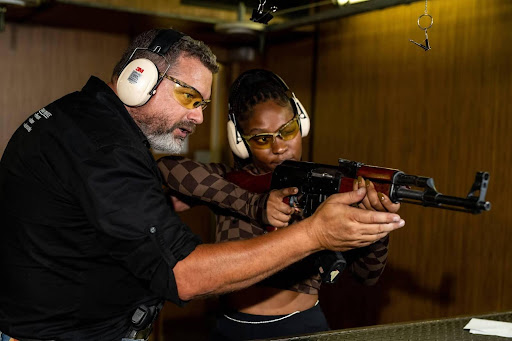
- Bring ear and eye protection: Muzzle report and debris are real hazards. Use certified hearing protection and safety glasses at all times.
- Ask range staff: If you’re unsure whether a type of ammunition is allowed at a given range (e.g., steel-core, tracer, armor-piercing), ask — policies vary.
How to Use This Glossary
- Use it as a conversational and reference tool at the range or shop.
- If you want to learn more about any single item (for example: “How does twist rate affect a particular bullet weight?”), ask — I’ll give a plain, practical explanation without turning into a technical manual.
- If you ever consider reloading, let me know and I’ll point you to safe, reputable beginner resources and recommended courses rather than giving step-by-step load data here.
Quick Reference — Common Ammunition Types New Shooters See
- .22 LR (Rimfire) — Cheap, low recoil, excellent for beginners and practice.
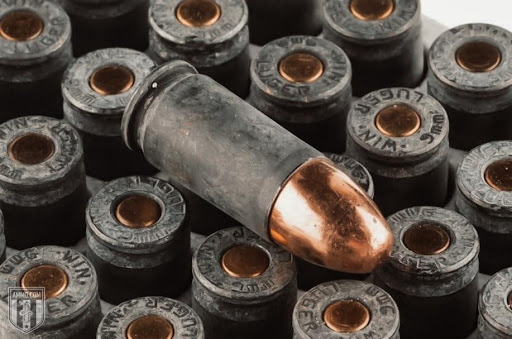
- 9mm Luger (9×19) — Very common pistol round, moderate recoil, widely available.
- .223 Rem / 5.56 NATO — Common rifle cartridge for sport shooting; note differences between civilian .223 Rem and military 5.56 NATO.
- .308 Win — Popular hunting and target round in larger calibers.
- 12 Gauge — The most common shotgun gauge; used with slugs or shot shells depending on purpose.
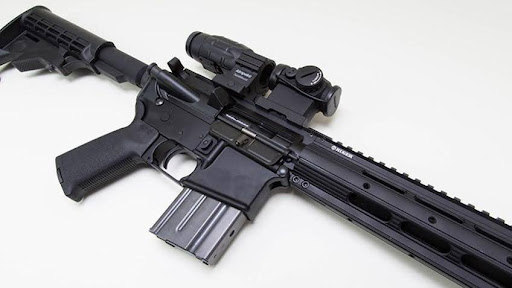
(These are examples, not endorsements. Always match to your firearm.)
Closing — Confidence Without Complexity
You don’t need to know every obscure term to be safe and competent. This A–Z glossary gives you the vocabulary to ask better questions and understand what you’re being told at the range or the gun counter. Learn the basics, prioritize safety and training, and build experience gradually..