

Introduction
Ballistics can get complicated fast. There are formulas, charts, units, coefficients, and test data that sometimes feel more like a physics class than a practical shooting topic. But at its core, ballistics revolves around just a few basic principles that decide how bullets fly and how they behave when they hit something. Three of the most important ideas are velocity, energy, and momentum.
Shooters hear these words constantly when comparing ammunition — “This load has more energy,” or “That caliber relies on velocity,” or “Heavy bullets carry more momentum at distance.” But without knowing what these terms actually mean, it’s easy to misunderstand what matters and why.
This report breaks down velocity, energy, and momentum in plain English. No politics, no over-complicated jargon — just useful knowledge that helps shooters make smarter choices for target shooting, hunting, competition, and self-defense preparation.
What Is Velocity?
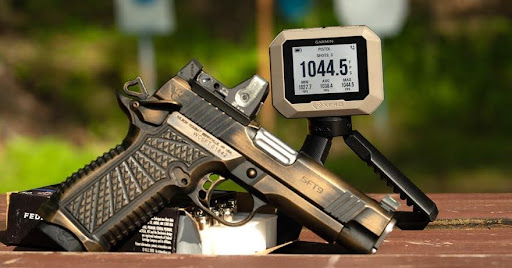
Velocity is just a fancy term for speed in a specific direction.
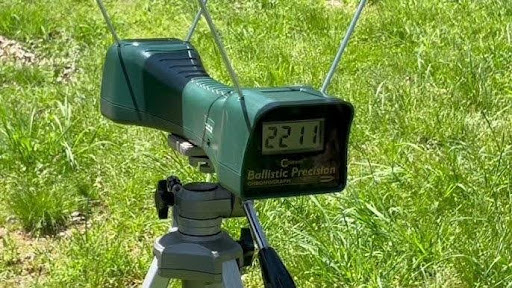
- When you hear a bullet travels at 1,200 feet per second (fps), that’s its velocity.
- It tells you how fast the projectile is moving away from the muzzle and toward the target.
Velocity matters because:
✅ Faster bullets reach the target sooner
✅ Faster bullets usually fly flatter
✅ Faster bullets deliver more energy (up to a point)
✅ Higher speed can improve expansion of certain bullet designs
Different types of ammunition rely more or less on velocity:
| Bullet Type | Strategy | Why Speed Helps |
|---|---|---|
| Lightweight fast bullets | Flat trajectory, quick energy transfer | Expands rapidly or breaks apart |
| Heavy slower bullets | Penetration & momentum | Keeps pushing through barriers or tough tissue |

Velocity also changes as the bullet flies:
- Highest at the muzzle
- Drops steadily due to air resistance
- Eventually can fall below the speed of sound, which affects stability and noise
Many cartridges are engineered around specific velocity goals:
- Supersonic ammunition stays above ~1,125 fps for a flatter shot path
- Subsonic ammunition stays below that threshold for reduced sound and smoother suppressor use
So, velocity is essential — but it’s only part of the story.
What Is Energy?
In ballistics, “energy” normally means kinetic energy — the amount of work a moving bullet can do.
Physics gives us a simple rule:
Energy comes from mass AND velocity — but speed matters a lot more.
The formula for kinetic energy is:
E = ½ × m × v²
(Energy equals one-half times mass times velocity squared)
Key takeaway:
✅ If you double the velocity, energy increases by four times
✅ But doubling bullet weight only doubles the energy

That’s why small, fast bullets — like a .223/5.56 — can have surprisingly high energy numbers compared to bigger but slower handgun rounds. Energy is often used to estimate a bullet’s ability to:
- Transfer force into a target
- Disrupt tissue during hunting or self-defense
- Expand or fragment reliably
But energy isn’t the only factor in performance. Two bullets might have the exact same foot-pounds of energy but behave very differently depending on bullet construction, velocity upon impact, and where the target is hit.
Because of its squared relationship with velocity, energy drops quickly as a bullet slows down. A fast rifle bullet that hits at 200 yards might not expand the same way it would up close — even if the energy number still looks good on paper.
Energy is useful to compare cartridges, but shouldn’t be treated as a magic measurement.
What Is Momentum?
Momentum describes how hard something is to stop once it’s already moving.
The formula is much simpler than energy:
Momentum = mass × velocity
Compared to energy:
- Momentum focuses more on weight
- It does not multiply velocity as dramatically
That’s why heavy bullets keep pushing, even if they’re slower.
Examples:
- A 230-grain .45 ACP round has strong momentum for close-range use.
- A hard-cast 10mm or .357 Magnum load keeps penetrating deep in tough targets.
- Big-game hunters rely heavily on penetration, which is related to momentum, not just energy.
Momentum is especially important for:
✅ Barrier penetration
✅ Bone-breaking capability in large animals
✅ Maintaining force at longer ranges
✅ Staying stable in the wind
But momentum alone doesn’t tell the whole story either. A bullet must also stay intact and travel straight to be effective; otherwise, momentum is wasted.
Velocity vs. Energy vs. Momentum — What’s the Real Difference?
Here’s a simple way to think about them:
| Concept | Analogy | Ballistic Benefit | Weakness |
|---|---|---|---|
| Velocity | How fast the punch is thrown | Flat trajectory and rapid expansion | Loses effectiveness quickly as it slows down |
| Energy | Power delivered on impact | Potential for tissue disruption | Can look impressive on paper but fail if the bullet doesn’t perform |
| Momentum | How hard the punch is to stop | Penetration and deep push | Heavy bullets fly slower and arc more |
None of these metrics is “more important” than the others. What matters is matching the characteristics to the purpose.

Plain-English Cartridge Examples
Some common calibers demonstrate different “philosophies” of ballistics.
| Caliber | Strategy | What It Relies On Most |
|---|---|---|
| 9mm | Fast enough, moderate weight | Balanced velocity + energy |
| .45 ACP | Big and slow | Momentum |
| .40 S&W | Middle ground | Mix of both |
| .223/5.56 | Light and extremely fast | Velocity + energy |
| .308 Win. | Heavy rifle bullets | Energy + momentum |
| 10mm Auto | Hard-hitting handgun | Momentum + retained velocity |
No caliber is “best” — each has strengths for different tasks.
What Happens Downrange?
A bullet is at its best right at the muzzle. But ballistics is all about how well it performs after that.
As distance increases:
| Distance Effect | Impact on Velocity | Impact on Energy | Impact on Momentum |
|---|---|---|---|
| Air drag | Quickly reduces speed | Energy plummets rapidly | Heavy bullets resist slowing |
| Drop | Bullet arcs downward | Affects hit probability | Worse with slow/heavy bullets |
| Wind drift | Pushes ammo sideways | Can ruin accuracy | Heavy bullets resist wind better |
This is why ballistic coefficients (BC) exist — they measure how streamlined a projectile is, which helps retain velocity and energy.

Impact Performance: What Physics Doesn’t Tell You
Velocity, energy, and momentum predict potential, but not outcome. Real-world effectiveness also depends on:
- Shot placement — the #1 factor in results
- Bullet design (FMJ vs. hollow point vs. bonded, etc.)
- Target material (cloth, hide, bone, gel, steel)
- Impact velocity — expansion only works within a specific window
For example:
- A hollow point that expands beautifully at 1,200 fps may perform poorly at 900 fps.
- A full-metal-jacket round might penetrate indefinitely, wasting its energy without damaging vital areas.
The numbers guide you — they don’t guarantee results.
High Velocity: Pros and Cons
Pros
- Flatter trajectory = easier long-range accuracy
- Higher energy for fragmentation and expansion
Cons
- Recoil increases in many cases
- Bullets can break apart too quickly on tough targets
- Velocity drops fast with distance
Rifle rounds benefit the most from speed — especially varmint or competition cartridges.
High Momentum: Pros and Cons
Pros
- Deep penetration (hunting, big game)
- Better performance through intermediate barriers
- More stable in crosswinds
Cons
- Trajectory arcs more, requiring range estimation skill
- Slower bullets may fail to expand without specialized design
Heavy, controlled-expansion bullets are favored where penetration is critical.
Choosing What Matters for Your Purpose
Here’s a quick decision guide for common shooting situations:
| Category | Your Priority | Look for More… |
|---|---|---|
| Target shooting | Accuracy + consistency | Velocity stability, low recoil |
| Long-range | Stay supersonic longer | High BC, retained velocity |
| Competition pistol | Fast follow-up shots | Manageable recoil, moderate energy |
| Home defense prep | Reliable expansion | Impact velocity performance + correct bullet type |
| Hunting medium game (deer, hogs) | Clean penetration through organs | Balanced energy + momentum |
| Big game (elk, bear) | Bone-breaking ability | High momentum + tough construction |
| Suppressed shooting | Quiet + stable flight | Subsonic velocity, heavier bullet designs |
You’re always trading something to gain something else — smart shooters know what tradeoffs make sense for their activity.
Key Takeaways — Plain and Simple
✅ Velocity is speed — helps bullets fly flat and hit hard
✅ Energy is potential to do work — heavily amplified by speed
✅ Momentum is the ability to keep pushing — linked to bullet weight
✅ Bullet design and placement ultimately decide real-world effectiveness
✅ No single metric tells the whole story — context always matters
If you understand these basics, you can:
- Compare calibers intelligently
- Select better ammo for the job
- Recognize marketing hype when you see it
- Predict performance changes with distance
Ballistics is physics — and physics favors knowledge.
Conclusion
Velocity, energy, and momentum form the foundation of how bullets move and how they behave when they strike a target. These three concepts aren’t academic trivia — they directly influence accuracy, penetration, expansion, and practical results in the field.
A sleek, fast bullet uses velocity and energy to deliver rapid transfer and flat trajectory. A heavier bullet uses momentum to penetrate deep and stay stable. Successful ammunition choices balance these properties according to the purpose — from tiny rimfire loads used for plinking, to high-velocity rifles for longer shots, to heavyweight projectiles for dangerous game.
By understanding what these measurements mean — and what they don’t — shooters can make smarter decisions without marketing pressure or misunderstandings. Physics stays the same whether you’re shooting paper, steel, or hunting ethically. Knowledge of velocity, energy, and momentum simply helps you apply that physics with confidence and skill.

